Daily Life Rooted in Spiritual Practice
For many Indigenous communities, the day does not begin with agenda apps or alarms it begins with ritual. Morning practices are not just habits; they’re affirmations. A cup of tea with herbs grown a few feet from the door, a prayer in ancestral language, a quiet offering to fire or water these acts ground the day in remembrance of who they are, where they come from, and what they’re part of. Community values live inside these gestures: respect, reciprocity, balance.
Daily customs follow a flow that mirrors the natural world. Seasonal changes don’t just dictate the clothes on your back but the rhythm of life itself. When the days stretch out in summer, there’s space for gathering and celebration. As winter comes, activity slows, reflection deepens. In cultures where the land’s pulse sets the tempo, time isn’t something you fight it’s something you follow.
Then there’s the triad that can’t be separated: land, language, and ritual. The names of mountains, rivers, and winds hold meaning. A chant to the morning sun isn’t just performance it’s a form of survival. Speak the land’s name long enough, and its stories stay alive. Preserve the stories, and the people endure. The rituals don’t just reflect the world they sustain it. That’s the point. That’s the power.
Ceremonial Rites of Passage
In indigenous communities, life is not a straight line it’s a series of thresholds. Birth, coming of age, marriage, and death aren’t just biological or social events; they’re sacred transitions, each bound by ritual, symbolism, and community witness. These ceremonies serve as both personal rites and communal reaffirmations of identity.
Birth rituals often include naming ceremonies, where a child is given not just a name but a place in the lineage. Chant and song might be used to welcome them into the world, connecting the infant to ancestors and spirits from the very start. Coming of age ceremonies look different from one group to another, but the thread is the same: a young person is tested, taught, and transformed before being recognized as an adult. Whether that’s through solitude in the forest, tattooing, or fasting, the ritual sticks with them for life.
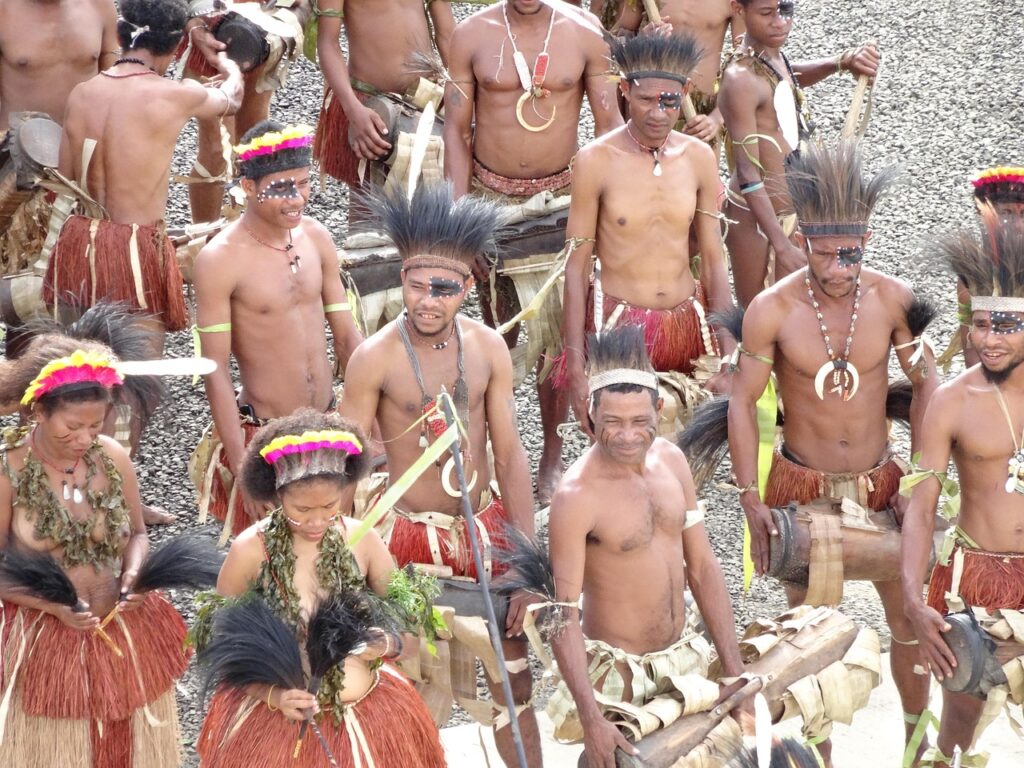
Marriage rituals weave two families and sometimes entire clans together. Traditional dress here isn’t ornamental, it’s encoded with meaning: colors, materials, and designs signal heritage, role, and even region. Chants bless the union. Shared meals, often featuring sacred or seasonal foods, mark the harmony of the new bond. Death, too, is a passage not an end. Funerary rites, mourning songs, and ritual feasts aren’t just for grief. They help the soul transition, and reaffirm the community’s continuity.
These rites do what modern life often fails at they slow time down. They give structure and gravity to change. And in cultures where written records are rare, ritual is how memory is kept. The past isn’t behind you in these moments it’s carried forward, stitched into the next generation.
Dress, chant, food they aren’t just decoration. They are codes passed down, living language in color and movement. And when these rituals are preserved, they keep cultures anchored in who they are even when everything around them shifts.
Storytelling and Oral Tradition
The Heartbeat of Cultural Memory
In many Indigenous communities, storytelling is more than entertainment it’s a vital method of passing down history, preserving values, and strengthening group identity. Myths, legends, and songs are cultural vessels that transmit ancestral knowledge across generations, often without the use of written language.
Core functions of storytelling:
Preservation of identity: Stories encode the beliefs, ethics, and history of a people
Transmission of ecological knowledge: Tales often include guidance on sustainable living, local species, and seasonal changes
Spiritual alignment: Myth and ritual are often intertwined, grounding stories in sacred meaning
Storytelling as a Ritual Performance
Ritual storytelling is never a passive act. In many traditions, it’s a communal event with specific roles, rhythms, and protocols. A storyteller might chant, dance, or use symbolic props to embody the narrative.
Storytelling serves various ritual purposes:
Teaching: Narratives guide children and adults alike in moral, practical, and spiritual matters
Healing: Stories are used in ceremonies to invoke ancestral power or process grief
Historical record: Oral tradition anchors a community’s origin, migrations, and transformations over time
Regional Diversity, Shared Reverence
While storytelling styles differ across continents and climates, Indigenous cultures share deep respect for the spoken word. Whether through sung epics in Polynesia or allegorical trickster tales in North America, the spoken tradition remains a living, honored practice.
Notable variations include:
Language and rhythm: From chant based Hawaiian mo‘olelo to dynamic West African griot recitations
Performance techniques: Use of masks, musical instruments, or set ceremonial settings
Community involvement: Some stories are reserved for specific seasons or initiated listeners
Despite regional distinctions, the reverence for oral tradition as a sacred anchor of community life is a shared value that transcends geography.
Rituals of Connection to the Land

Across the world, Indigenous communities have long marked the shifting seasons with ceremonies tied to hunting, harvesting, and honoring the land. These aren’t just agricultural check ins or practical gatherings they’re acts of relationship. The Ainu people of northern Japan host the Iyomante ceremony, offering thanks to the spirit of a bear after a successful hunt. In the Andes, Quechua farmers still honor Pachamama, the Earth Mother, by burying offerings before planting season. These rituals carry ecological timing built across generations.
But it’s not all about tradition. Embedded in these ceremonies is a deep, working knowledge of ecosystems. From fire management practices timed with celestial calendars, to fishing limits governed by lunar phases, Indigenous rituals often function as community taught environmental science. They manage resources, restore balance, and curb overuse without spreadsheets or satellites.
Then there are the sacred sites: places like Uluru in Australia or Bear Butte in the U.S., which offer more than beauty or symbolism. They’re living memory. Rituals conducted on these lands echo centuries of practice and connection. Some sites are closed to outsiders; many are under pressure from tourism or extraction. Still, they remain anchors spiritual centers that tell you where you are and how you’re meant to move.
This isn’t nostalgia. It’s knowledge in motion. Rituals rooted in the land are neither stuck in the past nor disconnected from the future. They adapt, but they don’t abandon their source: a continuous, grounded relationship with Earth.
Contemporary Revivals and Challenges
Across the globe, a quiet revival is underway. In 2026, Indigenous youth are stepping back into traditions once nearly lost relearning ceremonies, reviving prayers, and reawakening rituals passed down through whispers and memory. They gather in forests, on beaches, in deserts not as reenactors, but as living heirs. Many are guided by elders, others by digital archives and reclaimed language classes. The goal isn’t nostalgia; it’s survival with roots intact.
But the tension is real. Modernity presses in, fast and loud. Social media and tourism promise exposure but risk distortion. Sacred events get packaged into content. Ritual songs turn into background tracks. Lines blur between honoring and performing. Some youth are pushing back, creating closed spaces, drawing new boundaries: what stays sacred, what gets shared, and with whom.
All of this unfolds against a backdrop of accelerating climate change and land dispossession. Floods erase burial grounds. Drought silences ancient planting rites. The land which taught the ritual is shifting or gone. Yet many communities adapt, grounding ceremonies in resistance as much as reverence. Ritual becomes a way to tether identity in unstable times, to assert, not just inherit, tradition.
This isn’t just cultural preservation. It’s cultural evolution tough, messy, but alive.
How Travelers Can Respectfully Engage
Participating in or witnessing indigenous rituals comes with responsibility. It’s not enough to show up with a camera or curiosity you also need awareness. Observing without appropriating means knowing where you stand. These rituals are not performances for your entertainment. They’re sacred acts, deeply tied to identity, place, and pain that often stretches back generations.
If you’re invited to watch or take part, do it by being present not by turning the moment into content. Don’t dress up in ceremonial clothing you don’t understand. Don’t repeat words or gestures if you haven’t been taught their meaning. And certainly don’t repackage what you’ve seen into something marketable. Basic rule: if it feels like stealing, it probably is.
Instead, support community led experiences. Many indigenous groups run cultural programs, language exchanges, or ecotourism projects where knowledge is shared intentionally. These efforts prioritize self representation, and they invite learning not extraction. When you listen, ask, and act with purpose, you’re not just being respectful you’re helping preserve what matters.
For a deeper perspective, check out Why Language Immersion Travel Is Key to Cultural Understanding. It’s not about checking boxes it’s about showing up with humility.
The Enduring Power of Ritual
Indigenous rituals aren’t just relics of the past they’re frameworks for connection, belonging, and resilience. These practices, whether quiet morning offerings or multi day ceremonies, are deeply relational acts. They tie individuals to their ancestors, their communities, the land, and the seasons. Through these repeated patterns, life moments gain weight. Identity isn’t something you invent it’s something you inherit, nurture, and pass on through story, song, and ceremony.
Rituals remind us we’re not alone in our experience of joy, grief, growth, or death. They slow things down. They prioritize meaning over speed and process over outcome. In a digital world obsessed with hustle and spectacle, that grounded rhythm offers something rare: continuity in a fractured age.
Honoring these traditions now matters more than ever. Not because we need to romanticize them, but because they hold real knowledge about how to live connected, how to navigate change, and how to survive as a collective. They’re not just symbolic. They’re tools. And in times of rapid transformation and cultural forgetting, tools like these shouldn’t be overlooked. They should be protected, learned from, and respected.
 Janicel Dickersonezer has opinions about global tourism trends and experiences. Informed ones, backed by real experience — but opinions nonetheless, and they doesn't try to disguise them as neutral observation. They thinks a lot of what gets written about Global Tourism Trends and Experiences, Hausizius Journey Guides and Insights, Travel Horizon Headlines is either too cautious to be useful or too confident to be credible, and they's work tends to sit deliberately in the space between those two failure modes.
Reading Janicel's pieces, you get the sense of someone who has thought about this stuff seriously and arrived at actual conclusions — not just collected a range of perspectives and declined to pick one. That can be uncomfortable when they lands on something you disagree with. It's also why the writing is worth engaging with. Janicel isn't interested in telling people what they want to hear. They is interested in telling them what they actually thinks, with enough reasoning behind it that you can push back if you want to. That kind of intellectual honesty is rarer than it should be.
What Janicel is best at is the moment when a familiar topic reveals something unexpected — when the conventional wisdom turns out to be slightly off, or when a small shift in framing changes everything. They finds those moments consistently, which is why they's work tends to generate real discussion rather than just passive agreement.
Janicel Dickersonezer has opinions about global tourism trends and experiences. Informed ones, backed by real experience — but opinions nonetheless, and they doesn't try to disguise them as neutral observation. They thinks a lot of what gets written about Global Tourism Trends and Experiences, Hausizius Journey Guides and Insights, Travel Horizon Headlines is either too cautious to be useful or too confident to be credible, and they's work tends to sit deliberately in the space between those two failure modes.
Reading Janicel's pieces, you get the sense of someone who has thought about this stuff seriously and arrived at actual conclusions — not just collected a range of perspectives and declined to pick one. That can be uncomfortable when they lands on something you disagree with. It's also why the writing is worth engaging with. Janicel isn't interested in telling people what they want to hear. They is interested in telling them what they actually thinks, with enough reasoning behind it that you can push back if you want to. That kind of intellectual honesty is rarer than it should be.
What Janicel is best at is the moment when a familiar topic reveals something unexpected — when the conventional wisdom turns out to be slightly off, or when a small shift in framing changes everything. They finds those moments consistently, which is why they's work tends to generate real discussion rather than just passive agreement.